

For this Saturday Studio, we’re putting the spotlight on artist Joel Daniel Phillips’ exhibition, Killing the Negative: A Conversation in Art & Verse, currently on display at FWMoA until January 3, 2027.
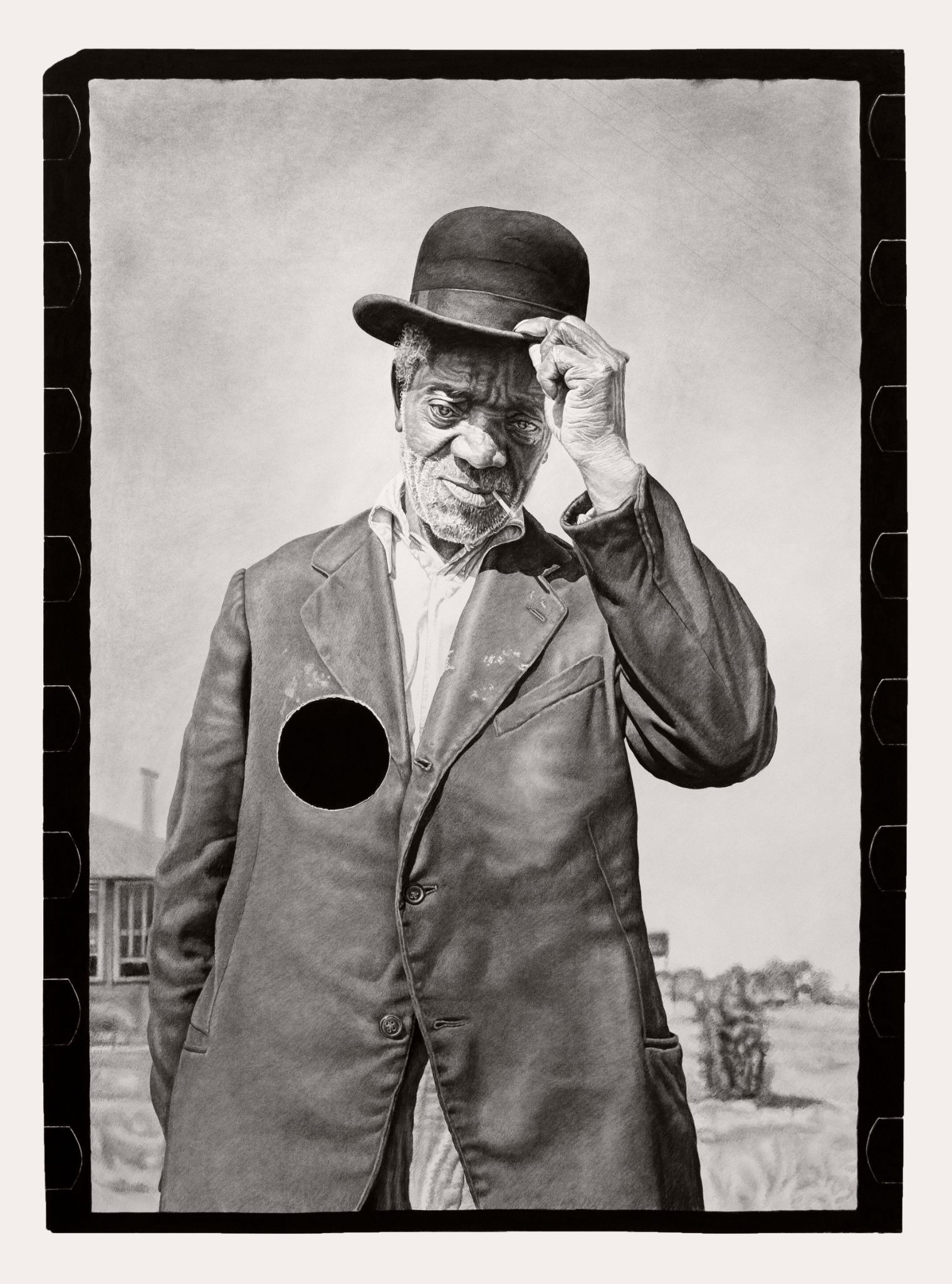
Phillips’ drawings work to enlarge, and thus bring a greater focus to film negatives taken by photographers representing the Farm Security Administration during the Great Depression. These photographers aimed to document the widespread poverty that affected communities across the United States. Because of this, the photographs are gritty and feel honest about the pain felt during such a dark time in American history. Phillips used his drawing prowess to transform these images into artworks, finally big enough for an audience to see, while maintaining the particular details of the photographer’s work.
Hyperrealistic artworks have the ability to fool audiences into thinking they are traced from a reference, though they mainly boil down to techniques of efficiency and intense attention to detail. However, tracing or copying an image can be a great tool for any artist practicing new techniques, fine motor skills, or utilizing a reference image to the beginning of their artwork. Together, we’re going to practice tracing and transferring an image onto a blank paper using graphite!

Materials:
- Paper
- Graphite pencil
- Ballpoint pen
- Any image you’d like to recreate, printed out
- Masking tape (optional)
Start by covering the backside of your printed reference image in graphite. You can do this by using shading techniques to scribble the side of the pencil all over the drawing surface. Make sure to apply pressure so the graphite pigment remains on the paper and creates a dark, filled in space.
Then, flip your image over so the graphite is directly touching the surface on which you want your image transfer to end up. Using your hand or masking tape to hold the image in place, trace the outline or details you wish to recreate by pressing down along the desired lines with your ballpoint pen.

You can check to make sure your graphite is transferring or to see if you missed any sections by holding down two corners of your image and lifting the other corners up. The goal is to not shift the reference so your image transfers correctly to the new paper. Once you have traced all the desired details, remove the reference image to reveal your copy. This works great as a beginning step to making your own hyperrealistic drawing, a detailed painting, and much more!

For more inspiration for your next drawing, see Killing the Negative: A Conversation in Art & Verse, on display at FWMoA October 31, 2026 through January 03, 2027.